
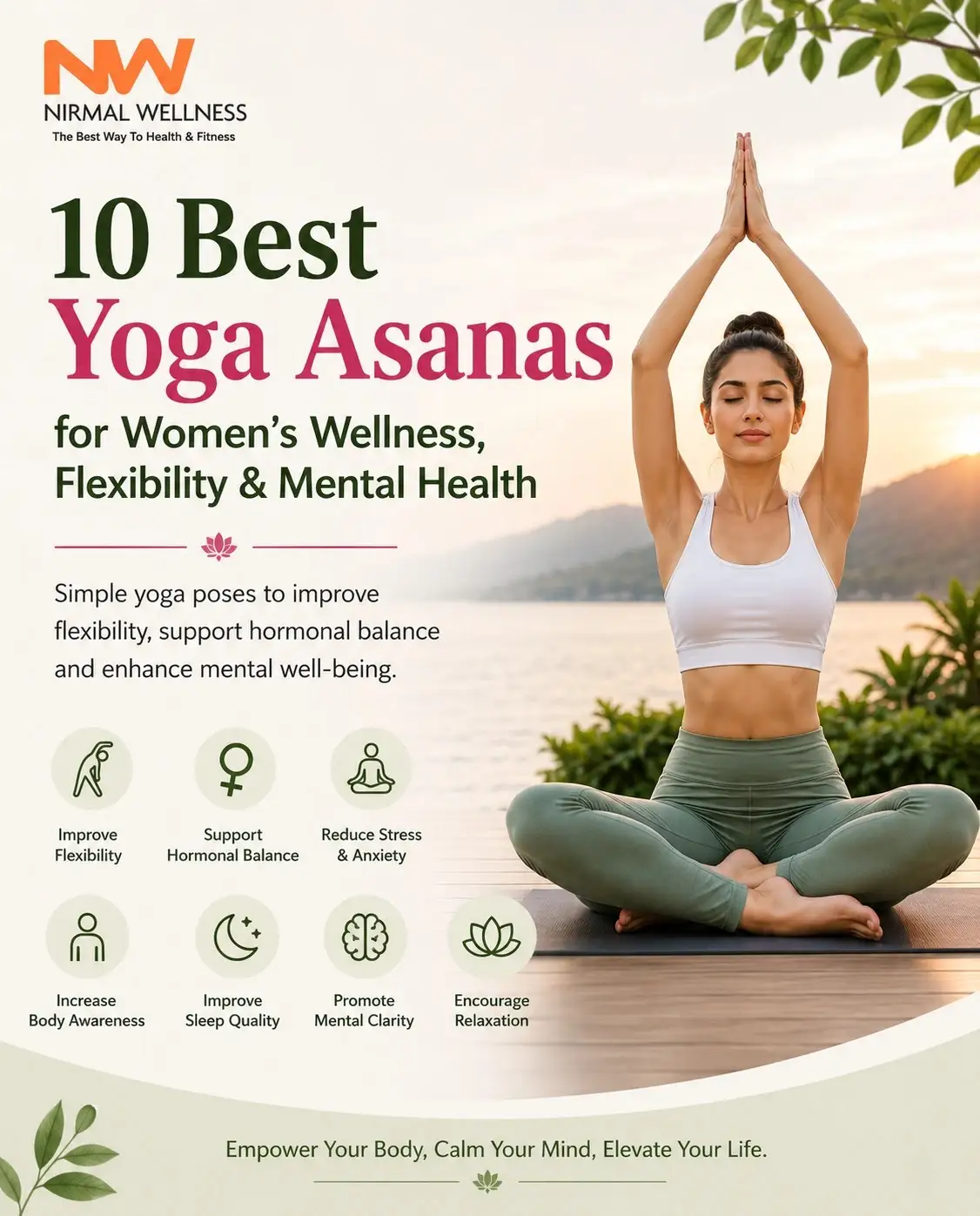

Yoga asanas have become an important part of women’s wellness routines because they support physical health, emotional well-being, and overall balance. Women often experience challenges related to stress, hormonal fluctuations, lifestyle changes, and reduced physical activity, which can affect both mental and physical health. Practicing yoga regularly may help improve flexibility, support hormonal wellness, and encourage relaxation.
In today’s fast-paced lifestyle, maintaining overall wellness requires more than just exercise. Yoga combines mindful movement, breathing techniques, and body awareness to create a holistic approach to health. Whether you are exploring yoga for beginners or learning different types of yoga asanas, incorporating the right practices into your daily routine can support long-term wellness goals.
This guide explores 10 Yoga Asanas for Women’s Wellness that may help improve flexibility, support hormonal balance, and contribute to better mental health.
Why Yoga Asanas Supports Women’s Wellness?
Yoga asanas are more than just physical movements; they support a holistic approach to wellness by connecting the body and mind. Wellness experts and various studies often highlight the positive role of yoga in managing stress, improving posture, increasing flexibility, and enhancing emotional well-being.
Regular practice may help improve mobility, support hormonal balance, reduce stress and anxiety, increase body awareness, promote better sleep quality, encourage mental clarity, and create a sense of relaxation. Many women incorporate different yoga routines into their daily lifestyle to support long-term health and overall wellness goals.
Benefits of Yoga Asanas for Daily Women’s Wellness Routine
Including Yoga asanas in a daily wellness routine may help women maintain both physical and emotional well-being. Regular practice can support flexibility, improve posture, encourage relaxation, and help manage daily stress levels. Since modern lifestyles often involve long working hours and limited physical activity, creating a consistent yoga routine may contribute to better balance, increased energy, and overall wellness over time.
You Can Also Read: Yoga for Pregnant Women in First Trimester
1. Child’s Pose (Balasana)
Among common yoga poses Child’s Pose is widely known for its calming effects.
Benefits:
- Helps reduce stress
- Relaxes the lower back
- Encourages deep breathing
- Supports mental relaxation
How to perform:
- Kneel on a yoga mat
- Sit back on your heels
- Stretch your arms forward
- Lower your chest gently
- Hold and breathe slowly
2. Butterfly Pose (Baddha Konasana)
Butterfly Pose is commonly recommended for improving flexibility and pelvic mobility.
Benefits:
- Stretches inner thighs
- Supports flexibility
- Helps reduce tension
- Encourages relaxation
How to perform:
- Sit comfortably
- Bring your feet together
- Hold your feet gently
- Move your knees slowly up and down
3. Cat Cow Stretch (Marjaryasana-Bitilasana)
This movement is among the most recommended yoga poses for improving spinal flexibility.
Benefits:
- Improves posture
- Supports spinal mobility
- Relieves back tension
- Encourages better breathing
How to perform:
- Begin on hands and knees
- Inhale and arch your back
- Exhale and round your spine
- Continue slowly
4. Mountain Pose (Tadasana)
Although simple, Mountain Pose helps improve posture and body awareness.
Benefits:
- Improves balance
- Supports posture
- Builds body awareness
- Encourages deep breathing
How to perform:
- Stand with feet comfortably apart
- Relax shoulders
- Keep spine straight
- Focus on breathing
5. Cobra Pose (Bhujangasana)
Cobra Pose helps stretch the front body and strengthen the back muscles.
Benefits:
- Opens the chest
- Improves flexibility
- Supports posture
- Helps reduce stiffness
How to perform:
- Lie on your stomach
- Place hands under shoulders
- Slowly lift your chest
- Keep shoulders relaxed
6. Bridge Pose (Setu Bandhasana)
Bridge Pose may help strengthen the body while promoting relaxation.
Benefits:
- Strengthens core muscles
- Improves flexibility
- Supports pelvic muscles
- Helps reduce stress
How to perform:
- Lie on your back
- Bend your knees
- Lift your hips slowly
- Hold for a few breaths
7. Tree Pose (Vrikshasana)
Tree Pose supports focus and body balance.
Benefits:
- Improves concentration
- Strengthens legs
- Supports stability
- Enhances mental focus
How to perform:
- Stand straight
- Place one foot against the opposite leg
- Bring palms together
- Maintain balance
8. Seated Forward Bend (Paschimottanasana)
This pose gently stretches the body and encourages relaxation.
Benefits:
- Improves flexibility
- Reduces tension
- Supports relaxation
- Helps calm the mind
How to perform:
- Sit with legs extended
- Slowly reach toward your feet
- Avoid forcing the stretch
9. Legs Up the Wall Pose (Viparita Karani)
This restorative posture is commonly included in wellness routines.
Benefits:
- Reduces fatigue
- Supports circulation
- Helps relax the body
- May reduce stress
How to perform:
- Sit beside a wall
- Lift your legs upward against the wall
- Relax your arms comfortably
10. Corpse Pose (Savasana)
Savasana is often practiced at the end of yoga sessions for complete relaxation.
Benefits:
- Helps reduce stress
- Supports mental clarity
- Encourages relaxation
- Promotes mindfulness
How to perform:
- Lie flat on your back
- Relax your entire body
- Focus on slow breathing
Understanding Different Types of Yoga Asanas for Women’s Wellness
Different types of yoga asanas provide different benefits. Some focus on flexibility, while others build strength or promote relaxation.
Common categories include:
- Standing poses
- Sitting poses
- Backbends
- Balance poses
- Restorative poses
- Breathing and meditation practices
Creating a balanced routine with these categories may support overall wellness.
Tips for Yoga for Beginners
If you are exploring yoga for beginners, starting with a simple and manageable routine can help build consistency and support long-term wellness goals.
Helpful tips include:
- Start with gentle movements
- Focus on proper breathing
- Practice regularly
- Avoid overexertion
- Listen to your body
- Learn correct posture
Consistency often provides better results than intense sessions.
Conclusion
Practicing 10 Yoga Asanas for women’s wellness can support flexibility, emotional balance, and overall well-being. Yoga combines movement and mindfulness, creating a holistic approach to wellness that can benefit women at different stages of life.
Whether you are exploring yoga poses with names, learning types of aasan, or beginning your journey with yoga for beginners, a regular and mindful routine may contribute positively to physical and mental wellness.
Frequently Asked Questions
1. How often should women practice yoga for overall wellness?
Many people practice 3–5 times a week, depending on their schedule and comfort level.
2. Can yoga help improve flexibility?
Regular practice may gradually increase flexibility and mobility over time.
3. Are these poses suitable for beginners?
Yes, many of these movements are beginner-friendly and can be practiced with proper guidance.
4. Which poses are commonly used for stress relief?
Child’s Pose, Butterfly Pose, and Savasana are commonly included in relaxation routines.
5. Can yoga support emotional well-being?
Yoga combines breathing and movement techniques that may help reduce stress and promote relaxation.